
THE DEBRIEF: How a Value-Add became a Total Loss
A 35% increase in NOI wasn't enough to avoid a 100% loss of investor capital.

This is The Debrief - a post-game analysis for LPs. Breaking down the plan, the reality, the result, and key takeaways of actual real estate syndication investments to better understand risk and invest accordingly.
Thanks to everyone who voted last week. By popular demand, I am posting the failed deal first. Next time I’ll post the win. Which is actually a much more interesting story…..
To respect the confidentiality of private investment vehicles, all names, specific locations, and exact proprietary figures have been anonymized or rounded.
The analysis provided is for educational purposes to illustrate market mechanics and risk management.
The Plan
A standard value-add play driven by renovations and added amenities to a dated multi-family community. A time-tested formula.
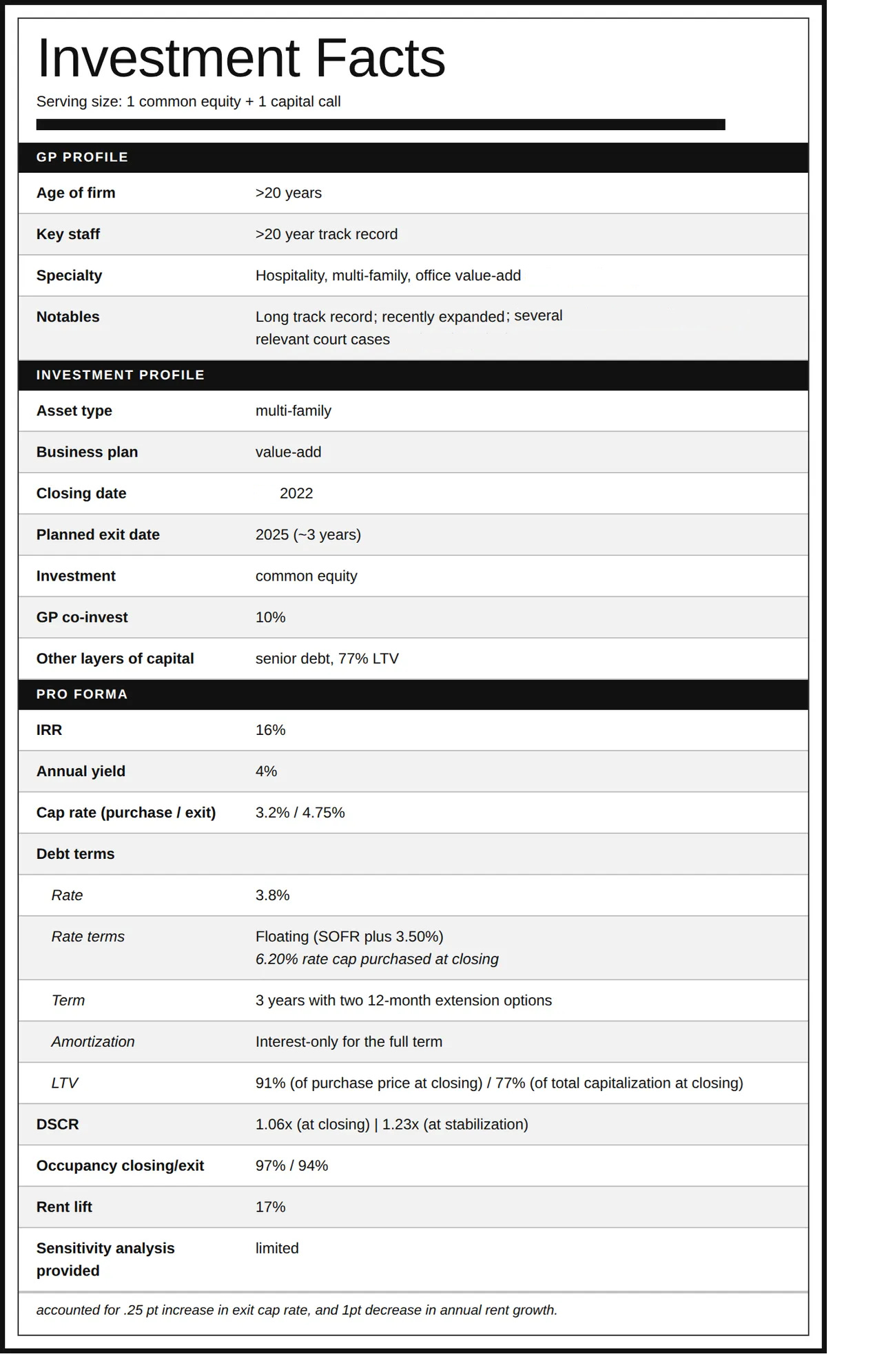
To respect the confidentiality of private investment vehicles, all names, specific locations, and exact proprietary figures have been anonymized or rounded. The analysis provided is for educational purposes to illustrate market mechanics and risk management.
The Reality
Where things deviated from the plan.
Debt burden
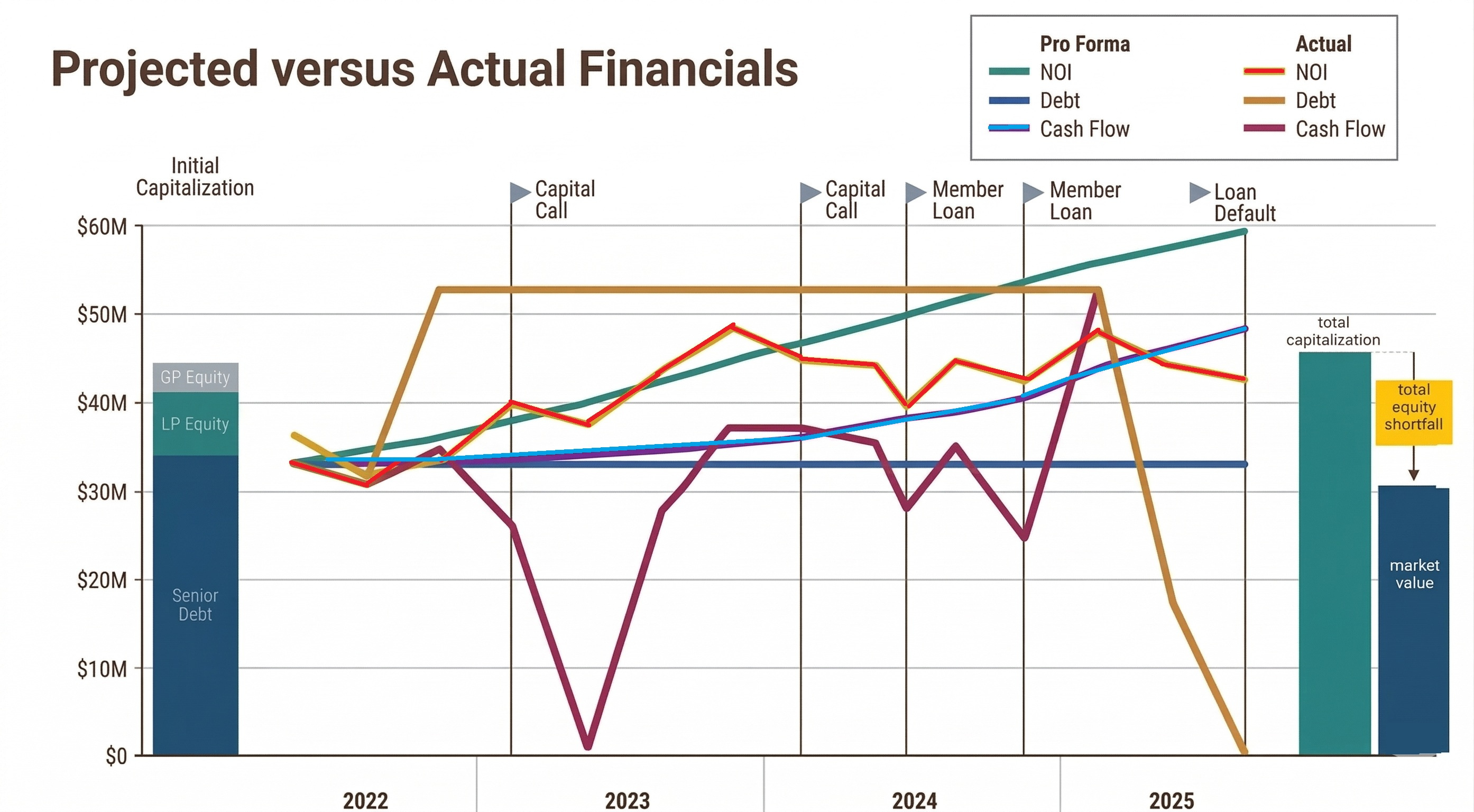
Approximately six months after closing, the effective interest rate hit its cap of 6% - quickly exceeding the NOI break-even interest rate of 4% and resulting in an effective DSCR of less than 1x. The debt burden effectively increased by 60%. The project was poised to bleed cash.
Gross income
Gross income initially exceeded expectations through 2023. However by mid 2024, rents softened, increasing expenses necessitated revised and abandoned renovation plans, and gross rental income growth stalled by late 2024 and never recovered.
Operational expenses
Insurance costs rose more than 20% and an increase in crime required hiring private security.
Market value
Increasing interest rates tend to drive higher cap rates and an associated reduced market value. Despite achieving a 35% increase in NOI, the 6.2% market cap rate depressed the value of the property dramatically to $15M less than its initial capitalization.
If my work has been worth your time, please subscribe.
The Result
NOI up 35% + Debt payments up 60% = 100% loss of equity
How it happened:
In late 2022 - just months after closing - the heavy debt burden was communicated by the GP.
Through 2023 and 2024, the GP successfully executed the value-add plan and took meaningful steps towards improving NOI. However this required several capital calls and taking on additional rescue capital. These capital infusions subordinated common equity under multiple layers of senior capital and put common equity recovery at greater risk.
By early 2025 the prolonged severity of the debt burden, depressed market valuation, increasing lender pressure, and no viable exit strategy left the deal underwater.
Out of options and under pressure from the lender, the GP attempted to sell the property in early 2025 for slightly more than the senior loan balance. This sale failed.
Failure was recognized towards the end of 2025, when the GP reported a negotiated transfer of the asset to the lender for a value below the total debt, thus resulting in a complete loss of equity.
Flaws apparent in the pitch deck
Aggressive business plan
The near zero allowance for deviation from the plan made the project high-risk. The reserves and break-even points for nearly every metric were razor-thin. Although not explicitly stated in the pitch deck, sufficient material was provided for investors to assess that the proposed plan left little room for error.
GP reputation
While having successfully executed many similar projects for more than 20 years, this market was new for the GP. The litigation claims against key staff are reason for concern. However, neither of these factors led to the failure of the project. In fact, the GP’s execution was solid with NOI outpacing pro forma metrics. Regardless of the outcome, both factors should be noted as potential reasons for concern of higher execution risk.
Key Take-Aways
Critical events that changed the planned result
The GP successfully implemented the plan but the market did not go according to plan. The rapid interest-rate increase created a downward spiral of suffocating debt, depressed valuation, and unachievable lender requirements.
The debt burden increased by 60% which resulted in the asset violating DSCR requirements.
Higher interest rates resulted in higher cap rates, which depressed the underlying asset value that should have been achieved from the impressive 35% increase in NOI.
The final (and third) capital call (and fifth injection of capital) to fund a possible cost reduction strategy failed. After repeated capital calls, LPs declined to provide additional funds.
Common equity was effectively lost irrespective of the project’s ability to successfully exit since common equity fell behind expensive layers of preferred equity, and additional layers of capital that would have been necessary to meet lender requirements and fund the remaining property improvements.
How this could have gone differently
1) Partner willingness to keep the deal alive
If the project had been able to survive as described above, and the asset sold in Q4 2027, a full return of common equity capital (with no return ON capital) would require a sale at a 4.75 cap rate. While the pro forma planned for a sale at a 4.75 cap rate, the historical average cap rate for the MSA is 5.5 and rates at the time of default were 6.2.
Despite projections that market forces could support a future sale at such a favorable cap rate, lenders and equity partners were not willing to risk more capital to keep the project alive.
2) Favorable market timing
If this project had been launched in 2018 when the market cycles were moving in a positive direction, there is a high likelihood that investors would have been rewarded. Unfortunately, this deal started at the absolute worst time: when investor and bank caution were low and accepting of thin margins, and the risk of a market correction was high.
Bottom Line
While it’s easy to blame the GP for failing to execute an aggressive business plan, it’s incumbent on the investor to recognize the risks and determine if those risks are in alignment with their risk tolerance.