
HEURISTICS: Pro Forma Data is Correct
This is No. 1 of the six-part real estate pro forma series.

This is Heuristics - where assumptions are called out and broken down so that you can invest with greater clarity.
The past three years have been a multi-front stress test of assumptions for commercial real estate. This series will cover some of the most common failure points where flawed assumptions and seemingly small numerical changes can make a good deal go bad.
This is the first of a six-part series.
“That’s enough, sit down.”
We were on slide three.
This was Entrepreneurial Finance. Week after week, team after team never made it to the end of their slide deck. The professors cut off presentations with the abrupt indifference of a guillotine.
“Where did you get that number? Why do you think that’s accurate? Sit down.”
Another week’s work, in the trash.
The weekly failure in Entrepreneurial Finance was the foundation for every success I later earned. The lesson was clear: the pro forma is a powerful yet fragile tool where one flawed assumption can result in a meaningless conclusion.
Understanding the Pro Forma
Pro forma mechanics are baseline knowledge for every accredited investor. A cornerstone of business school curricula, the pro forma is something anyone can learn to build, analyze, and stress test.
If you'd like a refresher on or introduction to pro forma mechanics, I recommend Accredited Investor Insights’ series on How to Read a Real Estate Pro Forma.
Just as crucial as the mechanics is understanding the source data and assumptions that are the foundation of the pro forma’s results. The product is only as good as the process.
Setting the Scene
The Pro Forma
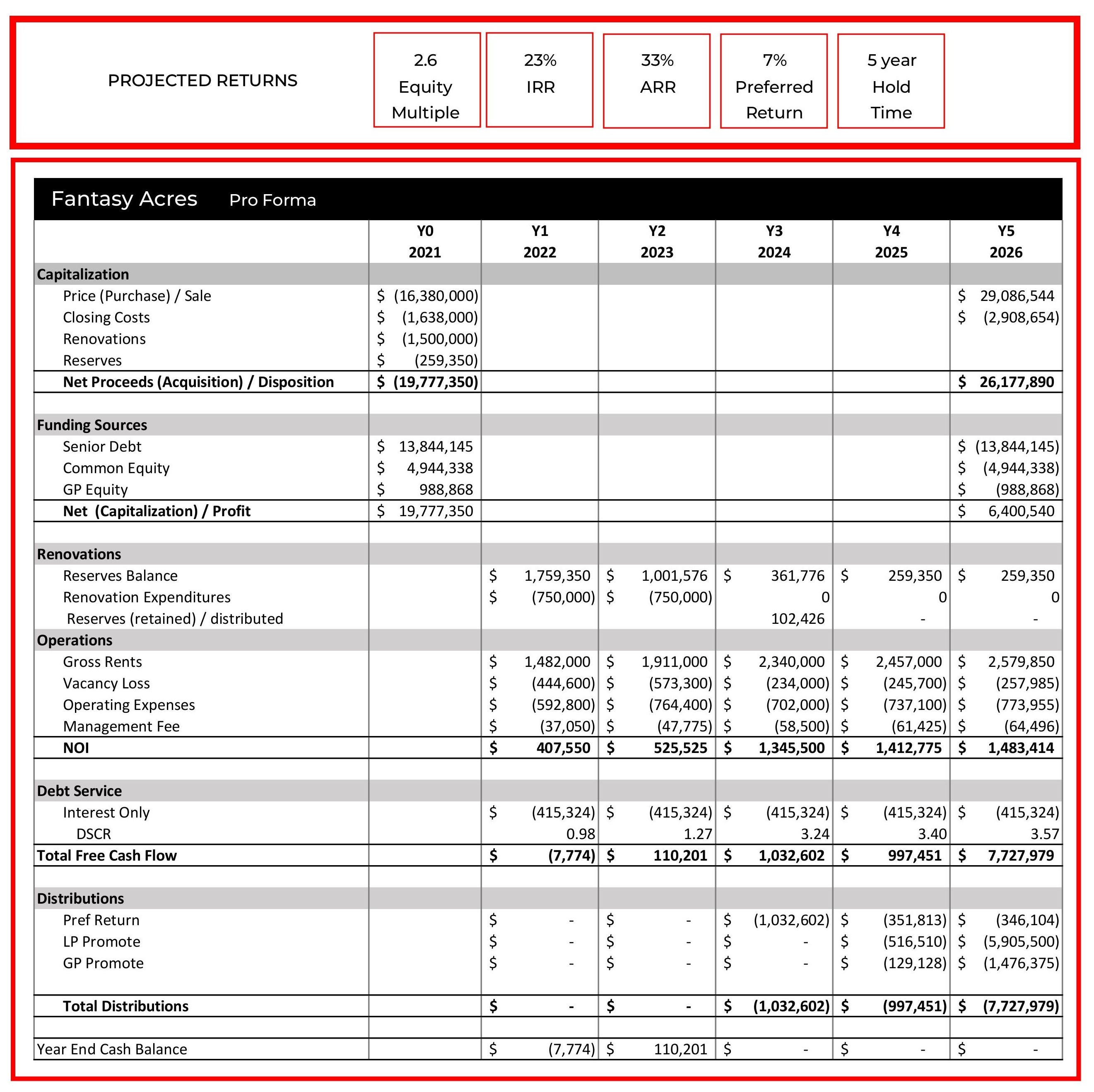
I have created a fictional project and pro forma for “Fantasy Acres” with the following characteristics:
Value-add, class B, multi-family project located in the north Chicago submarket.
Purchase date is June 2021 with a five-year hold.
Capital stack: senior debt, common (LP) equity, common (GP) equity.
Waterfall: 7% cumulative common equity preferred return; 80/20 LP/GP split.
Market Data
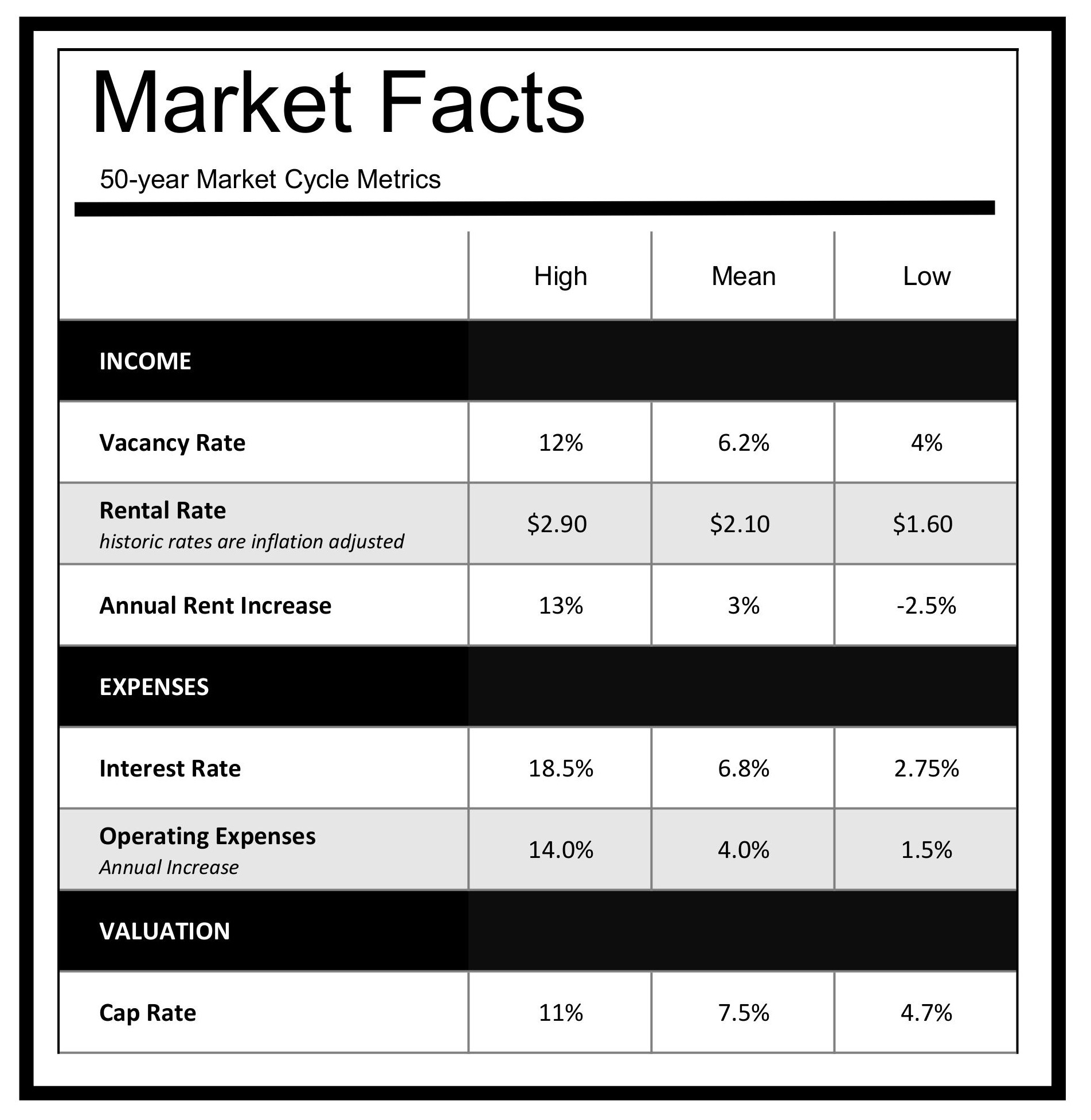
To test the data assumptions, we need to compare the pro forma numbers to market data. The following shows the 50-year highs, lows, and averages for the same asset profile: class B, multi-family in the north Chicago submarket.
This type of framing is NOT typically provided in a pitch deck; few GPs frame their thesis this way. But, as an investor, you must understand where the business plan sits relative to historic market variations - that is the only way to assess the deal's true risk profile.
Conclusion for Today
How aggressive or conservative does the pro forma appear to you?
What assumptions are evident?
What questions do you have about the business plan?
Next in the Series
I will stress test the pro forma for changes to:
Income: rental and vacancy rates
Expenses: debt and operating costs
Exit: cap rates and hold time
Market correction: when everything goes wrong
I’ll also show how AI can make this process much more manageable.